The Practical Role of Modern Dinghies and Inflatables
A reliable tender serves as the pickup truck of the boating world, ferrying supplies, crew, and pets from open moorings to the dinghy dock. While full-size vessels handle long-range transit, small tenders handle the tight channels, shallow sandbars, and rocky shorelines that deeper keels cannot safely reach. Choosing the right platform comes down to how you plan to stow, power, and handle the vessel during ordinary harbor routines.
Today, the market splits broadly between rigid tenders built from fiberglass or rotomolded plastic and inflatable platforms that trade structural rigidity for lighter weights and packability. An inflatable design cushions landings against mother-ship topsides, avoiding the gelcoat scuffs commonly caused by traditional hard dinghies. Furthermore, the buoyancy tubes provide substantial reserve stability, making boarding from a swim platform much less precarious in choppy conditions.
Your choice of tender dictates where and how you can cruise. If your journey involves hopping between coastal anchorages or tying up briefly near transient slips, a maneuverable craft keeps you mobile without needing to dock the primary vessel. Understanding the structural variations among inflatables helps you balance load limits, motor requirements, and onboard storage constraints before committing to a purchase.
Hull Designs: Rigid Inflatables versus Roll-Up Platforms
Rigid inflatable boats, commonly referred to as RIBs, combine a solid fiberglass or aluminum V-hull with inflatable buoyancy collars. This hybrid architecture delivers the true hydrodynamics of a conventional powerboat alongside the stability of an inflatable collar. A RIB cuts through harbor chop cleanly, planes quickly under moderate horsepower, and holds a direct line when tracking across strong coastal currents.
Roll-up and fold-flat tenders eliminate the rigid underlying shell in favor of flexible fabric bottoms supported by interlocking floorboards or high-pressure drop-stitch air decks. Drop-stitch floors inflate to an extremely rigid state, typically around ten to twelve pounds per square inch, providing solid footing while allowing the entire vessel to deflate and fold into a locker-sized duffel bag. While they sacrifice slicing ability in head seas, roll-up hulls weigh dramatically less than equivalent RIBs.
Weight differences dictate handling options. An aluminum-hulled RIB often weighs thirty to forty percent less than its fiberglass equivalent, making it easier on stern davits while resisting beach abrasion on gravel shores. Conversely, a fabric-bottom craft can be rolled up and stowed below deck on a cruising yacht, avoiding davits entirely. Evaluating your mother-ship lifting capacity or vehicle trunk space is the baseline test for selecting a hull platform.
Fabric Choices: Hypalon versus PVC Durability
Inflatable collars are manufactured almost exclusively from either polyvinyl chloride (PVC) or synthetic rubber compounds, universally recognized under commercial names like CSM or Hypalon. PVC boats are welded along their seams using heat or radio-frequency methods, producing uniform mechanical bonds at a lower baseline manufacturing cost. They are lightweight, compact when folded, and well-suited for seasonal boaters who store their craft out of direct sunlight.
Synthetic rubber fabrics rely on cold-glued, multi-layered seams reinforced with internal tapes. While heavier and more labor-intensive to assemble, Hypalon exhibits exceptional resistance to chemical breakdown, fuel exposure, and intense ultraviolet radiation. Boaters operating in tropical areas, such as owners frequenting marinas in Florida, generally choose CSM construction because high ambient temperatures and unrelenting sunlight degrade standard PVC coatings much faster.
Expected lifespan varies considerably between the two materials. A properly maintained PVC craft kept covered when not in service typically lasts eight to ten years before seam adhesive or fabric coatings degrade. A quality CSM vessel stored under similar conditions can easily exceed fifteen to twenty years of service. If your tender will live permanently exposed on deck chocks or dangling from stern davits, the added investment in UV-resistant fabric pays dividends over time.
Rigging a Motorised Inflatable Boat
Outfitting a motorized inflatable boat requires matching engine displacement to transom engineering rather than simply bolting on the maximum rated horsepower. Inflatable transoms consist of marine plywood or composite boards bonded directly to fabric sponsons. Overpowering creates severe torsional flex at the glue joints, forcing the bow skyward without settling into a clean running plane and risking structural failure at full throttle.
Gasoline outboards remain common due to their energy density and simple refueling logistics during extended cruises. Small four-stroke engines ranging from 2.5 to 9.9 horsepower deliver dependable range, though internal carburetors on single-cylinder units remain notoriously sensitive to ethanol phase separation if fuel sits idle. Adding an inline fuel filter and draining the carburetor bowl before periods of storage prevents the hard-starting issues that plague small outboards.
Weight balance is critical on compact transoms. A heavy four-stroke engine shifts the center of gravity aft, which causes light tenders to squat and pull air into the propeller during acceleration. Installing a tiller extension handle allows solo operators to sit further forward on the center thwart, bringing the bow down quickly and encouraging early planing without requiring trim tabs or hydrofoils.
The Modern Inflatable Electric Boat Experience
Electric propulsion has moved from auxiliary trolling setups into complete, purpose-built systems that rival small combustion outboards. A dedicated inflatable electric boat offers virtually silent operation, instantaneous torque at low revolutions, and zero exhaust fumes blowing back over passengers. These attributes make electric tenders particularly pleasant for harbor crawls, bird watching in protected estuaries, and quiet morning transits across crowded mooring fields.
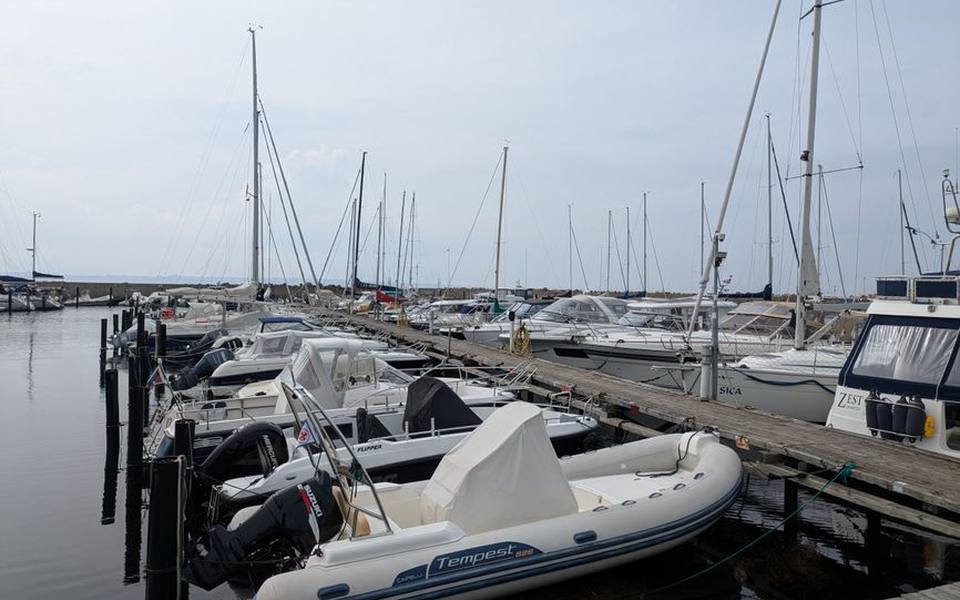
Integrated electric outboards combine the motor, drive unit, and lithium battery into a clean, modular assembly that clamps directly to the tender transom. Without engine oil, cooling passages, or liquid gasoline tanks, the entire unit can be carried sideways in a car trunk or stowed in a sailboat quarter berth without leaking fluids or releasing petroleum fumes into living quarters.
Range management on electric crafts depends on hull speed physics. Pushing a small displacement hull beyond its theoretical hull speed consumes battery capacity at an exponential rate. Dropping cruising speed by just one or two knots often doubles or triples the operating distance of a single charge, allowing standard lithium packs to handle multiple harbor round-trips before needing shore power at local slips.
Selecting an Electric Motor for Inflatable Rafts
Rigging an electric motor for inflatable raft models or soft-tail utility dinghies requires calculating static thrust alongside overall package weight. Basic recreational rafts generally lack rigid transoms, requiring optional bolt-on bracket kits that anchor directly to fabric D-rings or molded rubber mounts. These brackets cannot bear substantial loads, making ultralight 12-volt trolling motors the standard choice for casual shoreline explorations.
Thrust ratings for raft-compatible motors typically fall between 30 and 55 pounds, which translates to a modest but reliable top speed of three to four knots in calm water. Unlike heavier outboards, a compact trolling motor draws power through a portable battery box containing an absorbent glass mat (AGM) or lithium iron phosphate (LiFePO4) battery. Modern lithium batteries are especially popular because they reduce battery bank weight by more than half while maintaining steady voltage output until nearly depleted.
When outfitting a soft raft, cable routing and water resistance are key safety items. Battery boxes should be strapped down firmly forward of the operator to balance passenger weight and prevent terminal short-circuits if the raft encounters boat wakes. Furthermore, pairing the motor with a pulse-width modulation (PWM) digital controller provides smooth acceleration and significantly extends runtime compared to older stepped-resistor switch systems.
Registration and Coast Guard Compliance Guidelines
In most states, adding any form of mechanical propulsion—whether a twenty-horsepower gas engine or a tiny transom-mounted trolling motor—immediately subjects an inflatable to formal state registration and titling requirements. While human-powered rafts generally avoid registration hurdles, the moment a motor is mounted, the craft must display state registration numbers, validation decals, and carry official documentation aboard.
Coast Guard regulations regarding safety equipment apply to dinghies regardless of overall length. Every passenger aboard must have a properly sized, readily accessible Type I, II, or III life jacket, and children under state-mandated ages must wear theirs continuously while underway. After sunset, small powered tenders must display navigation lights, which can consist of portable, battery-operated red, green, and all-around white LED fixtures clamped to the tubes or transom.
Federal standards also require sound-producing devices, such as a whistle or compressed-air horn, and depending on local waters, visual distress signals. When launching from public points or cruising past commercial channels near facilities offering boat launch access, marine law enforcement officers routinely inspect tenders for standard carriage requirements. Keeping a dry bag stocked with the required safety gear avoids citations and ensures safe return crossings after dark.
Stowage, Davits, and Towing Mechanics
Securing a tender on a parent vessel requires choosing between stern davits, foredeck chocks, or towing astern. Stern davits keep the dinghy rigged and ready for instant deployment, but they add substantial weight to the extreme end of the primary yacht, which can amplify pitching motions in rough seas. Ensuring lifting lines, backing plates, and safety ratchets remain sound prevents the tender from breaking loose in heavy weather.
Towing an inflatable tender across open water demands a properly rigged bridle to distribute towing forces evenly across both sponsons rather than relying on a single bow eye. The towline should be floating polypropylene or specialized braided line to avoid fouling the mother ship's running gear. Adjusting the towline length positions the tender on the backside of the second or third stern wave, preventing the dinghy from surfing down into the mother vessel's transom.
For bluewater passages or extended layups, deflating and rolling the tender remains the safest method. Deflated craft should be washed thoroughly, dried completely to prevent mildew growth on folded fabric, and stored in a ventilated locker away from direct engine heat and fuel vapors that can deteriorate seam glues.
Launching and Shore Landing Strategies
Beach landings and ramp access require specific techniques to avoid damaging delicate bottom fabrics or propeller blades. Equipping an inflatable tender with retractable, transom-mounted beaching wheels allows a single person to roll the fully loaded boat up gravel or paved inclines without dragging the hull. Once floating in sufficient depth, the wheels swing up and lock cleanly out of the water.
When arriving at a formal harbor slip or public marina, inflatables offer convenient maneuverability. Boaters often roll up to a municipal dock or trailer their setup to a boat launch ramp for a quick day trip on protected sounds or inland reservoirs. Approaching docks at an idle throttle protects tube material from sharp dock hardware, protruding bolt heads, and splintered pilings that could cut into pressurized fabric.
Managing wave action during shore landings requires deliberate timing. Operators should tilt the outboard drive leg into shallow-water mode well before reaching the surf zone to avoid grounding the skeg or stripping water pump impellers in silt. Backing the craft in stern-first through light surf can keep the bow pointed outward into incoming breakers, maintaining steerage until the crew can step safely onto dry sand.
Routine Tube Maintenance and Field Repairs
Maintaining tube pressure preserves both boat performance and structural integrity. Inflatables lose rigidity as air contracts when warmer daytime temperatures drop in the evening, requiring frequent top-ups with a manual foot pump. Over-pressurization during hot sunny afternoons places immense stress on glued seams, making integrated pressure-relief valves or regular manual pressure checks an essential part of tender ownership.
Cleaning materials must be selected carefully to prevent breakdown of protective fabric coatings. Harsh petroleum-based solvents, acetone, or abrasive scrub pads strip the outer plasticizers from PVC and degrade the top layer of synthetic rubbers. Using specialized inflatable boat cleaners followed by UV protectant sprays creates a barrier against diesel soot, bird droppings, and sun oxidation.
Field puncture repairs require the correct adhesive chemistry matching your specific tube fabric. PVC requires solvent-based adhesives applied in thin coats under moderate humidity, while synthetic rubber repairs demand mechanical abrading of the patch site and two-part contact adhesives. Carrying a dedicated patch kit with fresh glue tubes, sandpaper, and round-cornered fabric swatches ensures you can handle minor pinholes or punctures right at the anchorage.
Published 2026-09-21 · reviewed with each rebuild, last September 2026.
Find marinas near you
The directory lists 7,143 marinas by state and city — pick your state or use the “Near me” button in the header.
More guides
-
 Safety
Boat Fire Extinguisher Inspection: Schedule, Checklist, and Costs
-
 Money
MoneyBoat Club Membership Costs: Initiation Fees, Monthly Dues, and Ownership Comparison
-
 Storage
Boat Winterization and Storage: Costs, Checklist, and Shrink Wrapping Guide
-
 Storage
Boat Slips and Docking Fees: How Much Does It Cost to Keep a Boat in the Water?
-
 Owning
Essential Nautical Terms and Practical Boating Knowledge: From the Helm to Harbor Life
-
 Owning
A Practical Guide to Boat Mooring: Buoys, Lines, and Technique
-
 Safety
Essential Boat Safety Gear, Marine Electronics, and Equipment Guide
-
 Service
Outboard Engine Service and Rebuild Costs: What Boat Owners Should Expect to Pay
-
 Safety
Marine Weather Forecasts and Warnings: Reading NOAA Reports and Coastal Maps
-
 Safety
Boating Safety Certification and Licensing: State Requirements and Exam Prep
-
 Service
Saltwater and Freshwater Fishing Charters: Choosing Inshore, Offshore, and Deep Sea Trips
-
 Owning
Bareboat Yacht Charters: How to Rent, Qualifications, and Cruising Preparation
-
 Buying
Pontoon & Tritoon Boats: Buying, Renting, Models, and Pricing Guide
-
 Owning
Holiday Boat Parades and Coastal Festivals: Viewing Guide and Schedules
-
 Buying
A Complete Guide to Buying Used Boats: Valuations, Inspections, and Registration
-
 Owning
Waterfront Dining and Dockside Restaurants: Boater's Guide to Dock and Dine
-
 Owning
Dockside Bait Systems, Live Bait Sourcing, and Fish Cleaning Station Setup
-
 Safety
Marine Fire Safety Inspection and Extinguisher Maintenance
-
 Storage
Complete Guide to Boat Winterization, Shrink Wrapping, and Storage Covers
-
 Buying
Electric Boat Motors and Trolling Systems: The Practical Conversion Guide
-
 Owning
A Practical Guide to Public Boat Launches, Kayak Ramps, and Water Access
-
 Owning
Marine Lithium Batteries vs AGM: Setup, Charging, and Performance
-
Service
Boat Fiberglass & Gelcoat Repair Guide: Fixing Cracks, Blisters & Scratches
-
Service
Marine Fuel Tank Cleaning and Rust Removal Guide
-
Safety
USCG Captain's License Guide: OUPV 6-Pack Requirements and Renewal
-
Service
Boat Towing Services and Marine Assistance Memberships Explained
-
Owning
Boat Lettering, Registration Numbers, and Custom Vinyl Decals
-
Service
Outboard Motor and Lower Unit Maintenance, Repair, and Marine Diesel Guide
-
Buying
Shallow Water Anchor Systems: Power-Pole vs. Minn Kota Talon & Raptor
-
 Service
Complete Guide to Marine Bottom Paint and Antifouling Application
-
Owning
Cruising America's Great Loop: Route Planning, Boat Choice, and Cruising Resources
-
Service
Boat and Fishing Charters: Complete Guide to Styles, Rates, and Booking
-
Buying
Personal Watercraft and Jet Ski Guide: Models, Rentals, and Buying
-
 Owning
Marine Supply Stores and Chandleries: Outfitting Your Boat
-
Safety
Marine Weather Forecasts and NOAA Wave Reports: A Practical Boater's Guide
-
Safety
USCG Boat Registration, Boater Education, and Navigational Safety Rules
-
Owning
Marine Lithium Batteries, Solar Panel Systems, and Trickle Charging Guide
-
Service
Boat Trailer Maintenance: Bearings, Replacement Kits, and Towing Prep
-
Safety
Marine VHF Radio Frequencies, Channels, and Electronics Setup
-
 Service
Complete Boat Hull Maintenance Guide: Washing, Acid Cleaners, Gelcoat Repair, and Antifouling Paint
-
Service
Fixing Inflatable Boat Leaks and Replacing Worn Bimini Top Canvas
-
Owning
Buoy Mooring Setup, Dock Lines, Cleat Hitch Knots, and Anchor Pins
-
 Owning
Boat Trim Tabs Guide: Lenco, Zipwake, Bennett, and Electric vs Hydraulic
-
Owning
Upgrading Boat Swim Platforms, Boarding Ladders, and Marine Vinyl Seating
-
Owning
Best Gifts for Boaters, Practical Marine Accessories, and Kayak Storage Racks